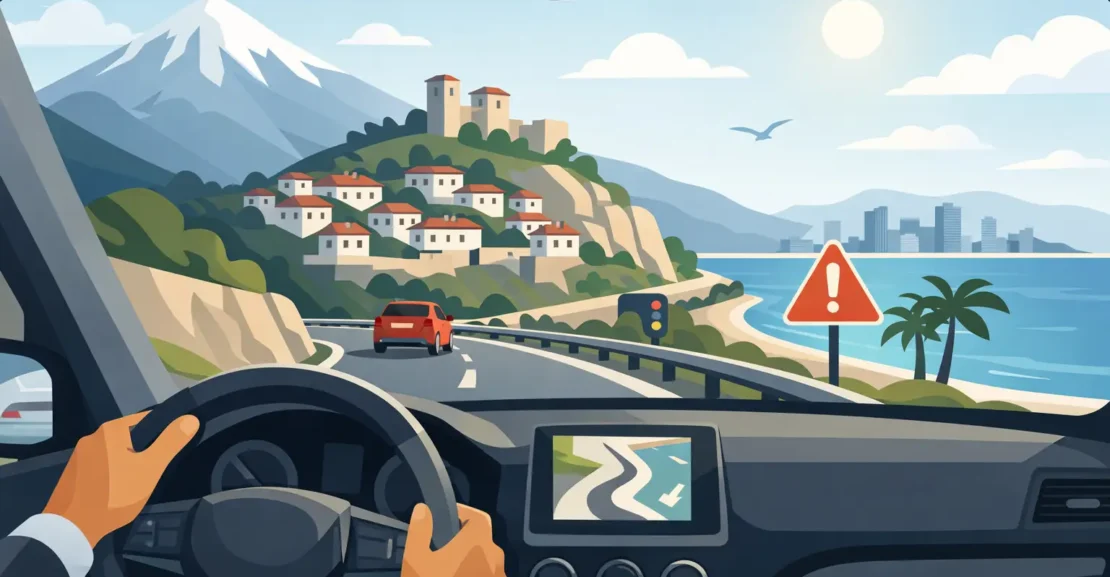
The first few minutes after leaving Tirana International Airport can feel busier than the road map suggests. Cars move with confidence, signs may be less familiar than at home, and the scenery quickly invites you to look beyond the windshield. So, is driving in Albania easy? For most visitors, yes – especially if you are comfortable driving in a new country and choose routes that match your experience.
Albania is a rewarding place to explore by car. A rental vehicle gives you the freedom to visit the coast, mountain villages, historic towns, and family destinations on your own schedule. The key is to expect a different driving rhythm, allow more time than a navigation app suggests, and keep your first day simple.
Is Driving in Albania Easy for American Visitors?
Driving in Albania is generally manageable for American visitors, but it is not exactly the same as driving in the United States. Major roads connecting Tirana with popular destinations are often in good condition, and newer highways make many journeys straightforward. In and around cities, however, traffic can be more energetic and less predictable.
Drivers use the right side of the road. Most rental vehicles are manual, although automatic options are available and can be a better choice if you are not used to shifting in traffic or on hills. Road signs follow familiar European symbols, but distances are shown in kilometers rather than miles.
The biggest adjustment is usually not the road itself. It is learning to stay calm around assertive local traffic. Give yourself room, avoid rushed decisions, and do not assume every driver will signal early. With a patient approach, most visitors settle in quickly.
What the Roads Are Really Like
Road conditions vary by route. The main roads near Tirana, Durrës, Vlorë, Shkodër, Berat, and other popular areas are usually the easiest for visitors. These routes can include modern highways, well-paved regional roads, roundabouts, and clear directional signs.
Smaller local roads can be a different experience. Surface quality may change without much warning, lanes can become narrow, and construction or parked vehicles may slow progress. In rural areas, you may also share the road with pedestrians, livestock, bicycles, or farm vehicles. This is normal, but it means a scenic drive should never be treated as a fast drive.
Mountain routes deserve extra care. Albania’s mountain scenery is one of the best reasons to rent a car, but sharp bends, steep sections, limited lighting, and changing weather make these roads better suited to daytime travel. If you are heading toward remote villages or planning a high-altitude route, check the forecast, keep your fuel level comfortable, and avoid relying on an ambitious arrival time.
Tirana Traffic Takes the Most Patience
For many travelers, driving in central Tirana is the least relaxing part of an Albanian road trip. Traffic can become heavy during morning and afternoon commuting periods, and busy intersections may require focused attention. Scooters, taxis, buses, pedestrians, and cars all compete for space.
The practical answer is simple: collect your car at the airport, get familiar with it on the roads outside the city, and consider whether you actually need to drive into central Tirana. If your hotel has parking, confirm the details before arrival. If it does not, use a secure garage or designated parking area rather than leaving the car wherever there appears to be an open space.
Outside the capital, driving often becomes easier quickly. The roads open up, traffic thins, and a car becomes a real advantage for reaching beaches, wineries, castles, and places that are difficult to visit on a fixed bus schedule.
Rules That Help You Drive Confidently
You do not need to memorize every local traffic detail before landing, but a few basics make a meaningful difference. Seat belts should be worn by everyone in the vehicle. Children should travel in an appropriate child seat, so arrange one with your rental if you are traveling as a family.
Speed limits can change between highways, towns, and rural stretches, so follow posted signs rather than relying on assumptions. Speed cameras and police checks are possible. Use your headlights when conditions require them, keep your attention on the road, and do not use a phone while driving unless you have a legal hands-free setup.
Alcohol and driving do not mix. The safest choice is to appoint a driver or leave the car parked if you plan to drink. It protects your trip, your passengers, and everyone else on the road.
Carry the documents provided with your rental vehicle and make sure you understand your rental agreement before departure. Depending on your license and the rental requirements, an International Driving Permit may be useful or required. Check this before travel rather than at the rental desk.
Parking and Fuel Are Simple With a Little Planning
Parking is usually easier outside central Tirana, but popular beach towns and historic centers can fill up in summer. Look for marked spaces, paid parking lots, hotel parking, or garages. Do not block entrances, narrow streets, sidewalks, or driveways, even if other cars seem to be doing so.
Fuel stations are widely available on major routes and around towns. Still, do not wait until the fuel light comes on before beginning a long coastal or mountain drive. Keeping at least a quarter tank gives you flexibility if a stop is closed, busy, or farther away than expected.
Before leaving the airport, take a minute to locate the fuel type, learn how the vehicle’s lights and wipers work, and save your accommodation address offline. Those small steps remove unnecessary stress when you are tired from a flight.
Which Trips Are Best for First-Time Visitors?
If you want an easy introduction to driving in Albania, start with well-traveled routes and daytime departures. Tirana to Durrës is a practical short drive, while trips to Berat or Shkodër offer a good balance of scenery and manageable roads. The Albanian Riviera is beautiful by car, though summer traffic and winding coastal sections mean it is best enjoyed without a tight itinerary.
Families may prefer to break longer drives into smaller sections. A two-hour journey can take longer with traffic, roadworks, photo stops, and meal breaks. That is not a problem when the schedule leaves room for it. Albania is more enjoyable when you can stop for a view, let children stretch their legs, or change plans without worrying about a tour departure.
A familiar compact or midsize vehicle is often enough for couples and small families traveling between cities and coastal destinations. Choose an automatic if that makes you more relaxed, and choose a larger car when luggage space and passenger comfort matter more than navigating narrow streets.
A Better Way to Start From Tirana Airport
The easiest first-day plan is to avoid making your arrival day the most demanding day of the trip. After collecting your vehicle, adjust the seat and mirrors, inspect the car, and set up your navigation before you enter traffic. Then give yourself time for the first 20 minutes on the road.
Euro Car Albania offers a practical airport-centered option for travelers who want to begin their trip with their own vehicle. Booking a car that suits your group, luggage, and confidence level helps make the drive feel simpler from the start.
If you arrive late, are traveling with young children, or have a long drive ahead, consider staying near Tirana or the airport for the first night. A rested driver will enjoy Albania’s roads far more than a tired one trying to reach a distant destination after dark.
The Honest Answer
Driving in Albania is easy enough for most prepared visitors, but it rewards patience more than speed. Major routes are accessible, a rental car creates real freedom, and many of the country’s best places are more enjoyable when you can stop whenever you want. The trade-off is that city traffic, rural roads, and mountain drives require more attention than a typical highway vacation.
Start with a vehicle you feel comfortable driving, plan realistic travel times, and take the first day at an unhurried pace. Once the airport traffic is behind you, the road is often the best part of the journey.