
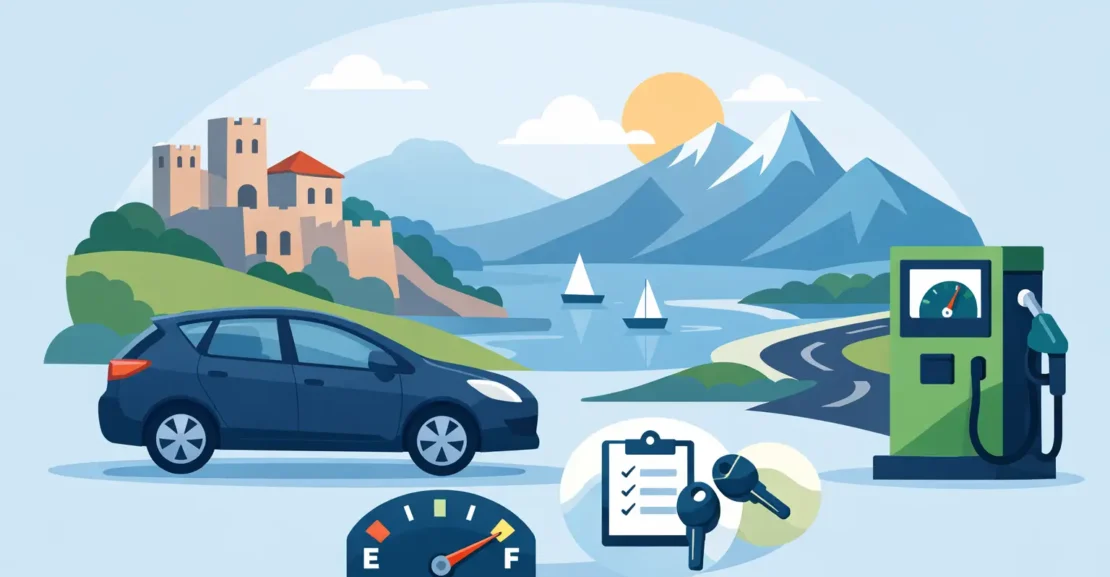
You have landed at Tirana International Airport, collected your luggage, and are ready to begin the trip. Before leaving the parking area, take one minute to understand the rental fuel policy for your vehicle. The fuel level recorded at pickup affects what you need to return, what you may be charged, and how easily your rental ends.
Fuel rules are usually simple when they are checked in advance. The details shown in your reservation and rental agreement always apply, so review them before driving away. A quick check at pickup can help you avoid an unexpected charge when it is time to return the car.
What a Rental Fuel Policy Usually Means
A rental fuel policy explains how much fuel is in the vehicle when you receive it and how much fuel you are expected to have when you return it. The most common arrangement is full-to-full: you collect the car with a full tank and return it with a full tank.
With this option, you pay only for the fuel you use. It is often the clearest choice for travelers because you can refill near the airport or before arriving at the return point. Keep the final fuel receipt until the rental has been completed.
Some rentals may be provided with a different fuel level, such as half a tank. In that case, the expected return level should match the level recorded on the vehicle check-out form. Do not assume that every rental starts full. Look at the gauge, check the paperwork, and ask the rental representative if anything is unclear.
A prepaid fuel option may also be offered in some cases. This means you pay for a tank of fuel before driving and can return the vehicle at any level. It may suit a short schedule or an early flight, but it can cost more if you return the car with unused fuel. Consider it carefully if you do not expect to drive far.
Check the Fuel Level Before Leaving
The fuel gauge is easy to overlook when you are focused on getting to your hotel, meeting family, or starting a road trip. Still, it is one of the most useful checks at pickup.
Make sure the fuel level shown on the rental agreement matches the dashboard. If the form says full but the gauge is below full, tell the representative before you leave. If the vehicle has a digital range display, remember that estimated range is not the same as the fuel level. The gauge or fuel bars are the better reference.
Taking a clear photo of the dashboard is a practical habit. Include the fuel gauge and, if possible, the mileage reading. It takes seconds and gives you a record of the vehicle condition at the start of the rental. This is especially helpful after a long flight, when small details are easier to forget.
Also check which fuel the vehicle requires. Many familiar European rental cars, including compact automatic models, may use diesel, while others use gasoline. The fuel type is normally marked near the fuel cap or inside the fuel door. Never rely on guesswork. Using the wrong fuel can cause serious vehicle damage and may lead to substantial costs.
Full-to-Full: The Easiest Option for Most Travelers
For most visitors, a full-to-full rental fuel policy is the easiest approach to manage. Collect the car full, refill it close to the return location, and return it full. There is no need to calculate the value of leftover fuel or estimate how much to add.
The key is timing. Do not wait until the last minute if your flight departure is early or you are returning the car during a busy travel period. Plan a fuel stop before heading to Tirana International Airport, and allow enough time to complete the refill and return process without rushing.
After refueling, check that the gauge reads full. Some pumps stop automatically before the tank is completely full, and the gauge may take a short time to update after you start the engine. If your agreement requires a full tank, make sure the dashboard reflects that level before you continue.
Keep your receipt, particularly when you fill up shortly before return. The receipt can show the date, time, location, and amount purchased if a question comes up about the fuel level. It is a small piece of paper that can save an unnecessary conversation later.
Returning With Less Fuel
If you return the car with less fuel than required, the rental company may charge for the missing fuel. A refueling service charge may also apply because the company must arrange the refill after your return.
This is why filling up yourself is usually more economical than returning the car below the agreed level. Rental companies need to cover fuel, staff time, and the operational work involved in preparing the vehicle for the next customer. The exact charge and terms should be shown in your rental agreement.
There are situations where returning with less fuel may be worth the convenience. For example, you may have a very early departure, be traveling with young children, or have limited time after a delayed journey. If so, make the decision knowing the possible cost rather than treating it as a surprise.
Do not overfill the vehicle beyond normal pump shutoff, and do not attempt to empty fuel from the tank before return. The right approach is simply to meet the agreed level safely and normally.
Fuel Stops During Your Albania Trip
Albania is ideal for independent travel, whether your plans include Tirana, the Albanian Riviera, Berat, Shkoder, or family visits outside the city. Your fuel planning should match your route.
In larger towns and along main roads, fuel stations are generally easier to find. If you are driving into mountain areas, rural villages, or along a less familiar route, refuel earlier rather than waiting for the warning light. This gives you more choice of stations and avoids adding stress to the drive.
At the station, confirm the fuel type before the nozzle goes into the vehicle. If an attendant helps with fueling, clearly state whether the car needs diesel or gasoline and check the pump display. A few careful seconds matter more than saving a minute.
Payment methods can vary by location, so carrying a payment card and some local cash can be useful during your trip. Ask for a receipt every time you refuel, especially for the final fill-up before returning the car.
A Simple Return-Day Plan
A smooth return starts before the final morning. Check your rental agreement for the return location, scheduled time, and expected fuel level the evening before. If your booking includes airport return, leave enough time for traffic, the fuel stop, luggage, and the vehicle inspection.
On the way back, use a station that is reasonably close to your return point without making the route complicated. Fill the tank, keep the receipt, and take one final photo of the dashboard showing the fuel gauge and mileage. Then return the vehicle as instructed.
If the fuel gauge does not appear to show the correct level after refueling, do not ignore it. Mention it to the rental team at return and show the receipt. Clear communication at that moment is much easier than trying to resolve a question after your flight has departed.
Questions to Ask Before You Book
Before confirming a rental, review the fuel terms alongside the price, vehicle class, pickup location, and insurance options. The cheapest daily rate is not always the best value if the fuel conditions do not suit your schedule.
Ask whether the vehicle is returned full-to-full, whether a prepaid fuel option is available, and what happens if the tank is below the required level. Also confirm the fuel type if you have not driven that vehicle model before. These are straightforward questions, and they help you compare rental options with confidence.
For a family trip, a business visit, or a drive to see relatives, the goal is the same: collect a car that is ready to go and return it without last-minute surprises. At Euro Car Albania, checking the fuel terms before you leave the airport helps keep your attention where it belongs – on the road ahead and the time you have in Albania.